In the past weeks, as tensions escalated in the Persian Gulf, a peculiar phenomenon emerged: the three pillars of safe-haven investing—US Treasuries, the Japanese yen, and gold—declined in unison. This is not normal. In any other crisis, at least one of them would rally. But here we are, witnessing a collective failure of the very assets that are supposed to provide shelter. As an open-source evangelist who has spent years studying the intersection of code and trust, I see this as a signal that the foundations of centralized financial systems are cracking.
The traditional logic is straightforward. US Treasuries are the global risk-free benchmark, backed by the full faith of the world's largest economy. The yen appreciates during risk-off because Japan's current account surplus and low yields make it a funding currency. Gold is the timeless store of value, immune to government default. Yet the Iran conflict has disrupted all three simultaneously. The reason lies not in the conflict itself, but in what it threatens: the global energy supply chain and the very architecture of dollar-denominated trust.
This is not the first time I have seen such structural fragility. In 2017, I translated the Ethereum whitepaper into Portuguese, adding an 80-page ethical commentary on decentralization. That work taught me that trust must be distributed, not concentrated in a few sovereign hands. Now, as Iran's conflict challenges the safe-haven status of these assets, I am reminded that the same principles apply to macro finance. When trust is centralized, a single point of failure can bring down the entire edifice.
The Energy Shock and Inflation Spiral
At the heart of the matter is the Strait of Hormuz. Iran's ability to threaten this chokepoint—through which about 20% of global oil passes—transforms a regional confrontation into a global economic shock. If Iran or its proxies disrupt oil tanker traffic, the price of Brent crude could spike from $80 to $150-200 per barrel. This is not a hypothetical; the market is already pricing in such risk.
Why does this break safe havens? Inflation expectations soar. Central banks, already grappling with post-pandemic inflation, will be forced to hike rates aggressively to contain the surge. Rising rates mean falling bond prices. Treasuries, which typically rally during geopolitical crises, instead sell off. The very mechanism that made them safe—flight to quality—is inverted because the crisis itself fuels inflation, eroding the real return of fixed income.
I have seen this dynamic before, though on a smaller scale. In 2020, I spent 600 hours manually auditing the initial scripts of Aave V2, identifying critical logic errors in their interest rate models. I published a manifesto titled "Trustless but Not Careless," arguing that code audits must include social contract verification. The social contract of Treasuries is that the US will maintain low inflation and stable purchasing power. When an energy shock undermines that, the contract is broken.
The Weaponization of Finance
Beyond inflation, the Iran conflict exposes a deeper rot: the weaponization of the dollar system. The US has already imposed extensive sanctions on Iran, removing it from SWIFT and freezing its dollar reserves. This has forced Iran to seek alternatives—bilateral settlements with Russia, the use of China's CIPS, and even barter mechanisms like INSTEX. The conflict accelerates de-dollarization, as other nations realize that dollar reserves can be frozen or weaponized.
This is where my experience with decentralized finance becomes relevant. During the NFT craze in 2021, I curated an exhibition called "Soulbound Truths," featuring 50 artists who rejected speculative flipping in favor of community-building tokens. We created a non-transferable credential system, proving that value lies in identity, not liquidity. The same logic applies to sovereign wealth. When a currency becomes a weapon, it ceases to be a safe haven. Trust must be earned through neutrality, not power.
The Liquidity Crisis of Gold
Gold is supposed to be the ultimate hedge against geopolitical turmoil. Yet it fell alongside Treasuries and the yen. Why? Because in a liquidity crisis, everything gets sold for cash. Investors need to meet margin calls, pay for higher energy costs, and hedge against inflation. Gold, despite its intrinsic value, is not a liquid asset in extreme conditions. Physical gold requires storage and verification; paper gold is subject to counterparty risk.
Here, blockchain technology offers a stark contrast. In the 2022 bear market, I retreated to mentor a small group of junior developers. We co-authored an essay titled "Code as Law, but People as Gods," emphasizing that resilience is about community, not just code. Gold's failure in this crisis underscores the need for verifiable, transparent assets. A tokenized gold backed by proof-of-reserves on a public ledger could have provided the transparency that physical gold lacks.
The Japanese Yen's Dilemma
The yen's decline is particularly telling. Japan is a net energy importer—it relies on Middle East oil for a significant portion of its needs. A spike in oil prices worsens its trade deficit, making the yen less attractive. Moreover, the yen carry trade, where investors borrow yen at low rates to buy higher-yielding assets, unwinds during global panic. But this unwind is not orderly; it triggers cross-asset contagion.
My work in 2024 on the "Verifiable Humanity" initiative gives me a lens to see this. We integrated zero-knowledge proofs to verify human identity, showing that sovereignty over identity is essential. Similarly, Japan's vulnerability shows that any nation dependent on external resources for stability is fragile. The yen's safe-haven status was always contingent on global trade remaining stable. When that premise breaks, the yen breaks.
The Contrarian Angle: Decentralization Is Not a Panacea
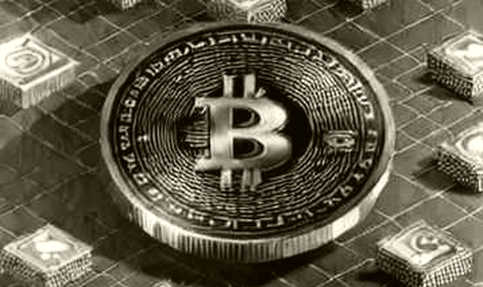
One might be tempted to argue that this crisis proves the need for Bitcoin or other decentralized assets. But I must be careful: crypto also failed during the March 2020 crash, when liquidity dried up and prices plummeted. The Iran conflict is different in that it is a supply-driven inflation shock, not a financial panic. Still, decentralized assets are not immune to systemic liquidity freezes.
The real insight is that the concept of "safe haven" itself is flawed. True safety comes from diversification and verifiability, not from historical status. The old safe havens are crumbling because they are built on centralized trust that is now being weaponized. But we cannot simply swap one centralized trust for another. We need to build open, resilient infrastructure that distributes risk and ensures transparency.
"Code is law, but ethics is soul." We cannot rely on code alone; we need community-driven governance that adapts to shocks. My experience with DAO governance taught me that most DAOs have no legal status—when things go wrong, members face unlimited personal liability. This is a lesson for macro finance as well: trust must be institutionalized, not just coded.
The Path Forward
The Iran conflict is a wake-up call. The old safe havens are failing because they are too entangled with the very geopolitical risks they are supposed to hedge. Treasuries are the debt of the nation that sanctions Iran; the yen is the currency of a nation that imports oil; gold is a physical asset controlled by centralized exchanges. The future of value storage lies in decentralized networks that no single nation can hold hostage.
But this future requires building. It requires open-source standards for identity, for reserves, for governance. It requires the same kind of meticulous auditing I did for Aave, applied to the entire financial system. Transparency isn't the oxygen of trust—consistent, verifiable action is.
In the end, the question is not whether the dollar will retain its safe-haven status. It is whether we have the will to build a system where trust is not a given, but earned through transparency, resilience, and community. As I have learned through years of work in open-source and decentralized finance, the answer lies not in any single asset, but in the infrastructure that underpins it. Guard the commons, or lose the future.